
When it comes to choosing affordable email hosting in 2026, finding the right balance between cost and features is very important. Some providers stand out because they offer excellent value without forcing you to spend heavily. For example, platforms like Zoho Mail are widely preferred by users who want a cost-effective solution, as they provide free email hosting options along with custom domain support and decent storage. This makes it a strong choice for startups, bloggers, and small businesses that want professional email without high investment.
On the other hand, if you are looking for ultra-low pricing with essential features, IONOS is another solid option in the email hosting space. It offers very budget-friendly entry plans, making it ideal for beginners or small businesses that want to minimize costs while still maintaining a professional email presence.
Apart from these popular choices, there are several other affordable email hosting providers available in the market. The best option ultimately depends on your specific needs—whether it’s storage capacity, security features, ease of use, or scalability. In this guide, we will explore 8 of the best cheap email hosting providers in detail, comparing their pricing, features, and overall performance. Additionally, we’ll also share a smart bonus tip at the end that can help you significantly reduce your overall email hosting expenses.
Note: If you prefer an all-in-one solution that includes both website and email hosting, then Network Solution is worth considering. Instead of managing separate services, you get everything in a single plan, which makes setup easier and more cost-effective. With its affordable pricing, Network Solution provides a budget-friendly way to manage your website along with professional email accounts. Plus, it also includes a free domain for the first year, making it an attractive option for beginners, bloggers, and small business owners who want reliable email hosting without spending too much.
Top 8 Companies offering Budget frindely Email Hosting in 2026
| Provider | Price from (per month) | Mailboxes (Users) | Storage | Email Aliases |
|---|---|---|---|---|
| Zoho Mail | Free / $1 | 1–5 users | 5GB+ per user | Yes |
| Network Solutions | $2.99* | 1 user | 80GB* | Yes |
| Hostinger | $2.69 | Multiple users | 10GB+ | Yes |
| Namecheap | $0.99 | 1 mailbox | 5GB | Yes |
| Bluehost | $2.49–$3.99 | Multiple depends on hosting plan | 100MB – Unlimited | Yes |
| IONOS | $1 | 1+ users | 2GB | Yes |
| Fastmail | $3 | 1 user | 2GB–30GB | Yes |
| Proton Mail | Free / $3.99 | 1 user | 1GB–15GB | Yes |
If your goal is to choose email hosting for a team instead of just personal use, it’s important to select a provider that supports multiple users from the beginning. Services like Zoho Mail and Network Solutions are good starting options, as their entry-level plans are designed to handle more than one mailbox, making them suitable for small teams and growing businesses.
As your requirements increase, most email hosting providers offer easy scalability. You can upgrade your plan, increase storage, or add more mailboxes whenever needed. This flexibility ensures that your email hosting solution continues to support your business growth without any disruption.
1. Zoho Mail
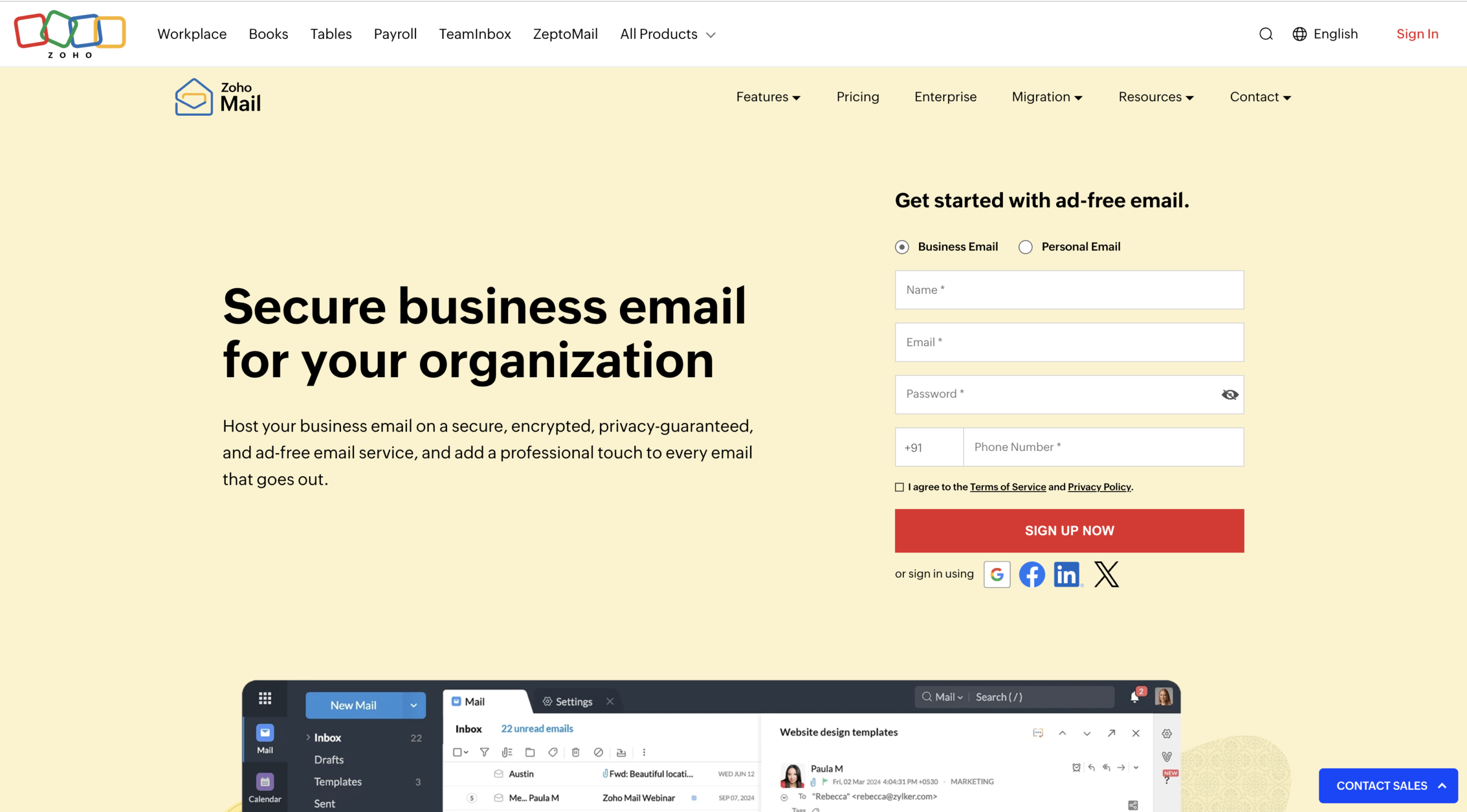
Zoho Mail ranks at the top of our list because it offers one of the most cost-effective email hosting solutions available today. Unlike many providers that only provide limited-time trials, Zoho Mail includes an actual free plan that you can continue using without any subscription fees. This makes it an excellent option for individuals, startups, or small businesses that want a professional email without a monthly expense. In most cases, the only cost you’ll need to cover is purchasing a domain name, which is often more affordable than paying for a full email hosting plan.
However, there is one limitation with the free version. It is designed primarily for browser-based use, meaning you’ll need to access your emails through Zoho’s web interface. If you prefer using external email clients or mobile apps with advanced syncing features, this restriction might not suit your workflow.
The good news is that upgrading to a paid plan is very affordable. Zoho Mail’s entry-level email hosting plan, known as Mail Lite, is priced at a very low monthly rate per user. It keeps the same base storage while unlocking additional features such as better protocol support, enhanced usability, and more flexibility. If you need extra storage, you can easily upgrade to a higher tier at a slightly increased cost, making it a scalable solution for growing users.
Overall, Zoho Mail stands out as a flexible and budget-friendly email hosting provider that works well for both beginners and expanding businesses.
Included in the Cheapest Paid Plan
- Customised domain support for professional email hosting
- Basic storage (usually 5GB–10GB per user)
- IMAP & POP access for email clients
- Spam filtering and basic safety features
- Access on mobile, desktop, and webmail
- Ability to create multiple email accounts (depending on plan)
- Simple admin panel to manage users and emails
- Basic productivity tools like contacts or calendar (in some providers)
Zoho Email Hosting Pros & Cons
| Pros | Cons |
|---|---|
| Very affordable email hosting plans | Free plan has limited functionality |
| Offers a genuine free plan (not just trial) | No IMAP/POP in free version |
| Clean, ad-free email interface | UI may feel basic compared to Gmail |
| Strong security (encryption, MFA) | Limited third-party integrations |
| Easy scalability for teams | Advanced features only in higher plans |
| Integration with Zoho apps (CRM, Docs, etc.) | Can feel complex for new users |
If You Need More Advanced Features
If your requirements go beyond basic usage, upgrading your email hosting plan can unlock more powerful features and higher limits. Zoho Mail offers a premium upgrade option that is ideal for businesses and teams handling large volumes of emails or attachments.
With this advanced email hosting plan, you get significantly higher storage per user, allowing you to manage emails without worrying about space limitations. It also supports larger attachment sizes, which is useful for sharing files directly through email. In addition, features like email backup, enhanced security, and encryption ensure that your data remains protected and easily recoverable when needed.
This upgraded plan also includes all the benefits of the basic tier, along with improved performance and additional tools designed for professional use. Overall, if you are running a growing business or need a more robust email hosting solution, moving to a higher plan is a smart and scalable choice.
2. Network Solutions
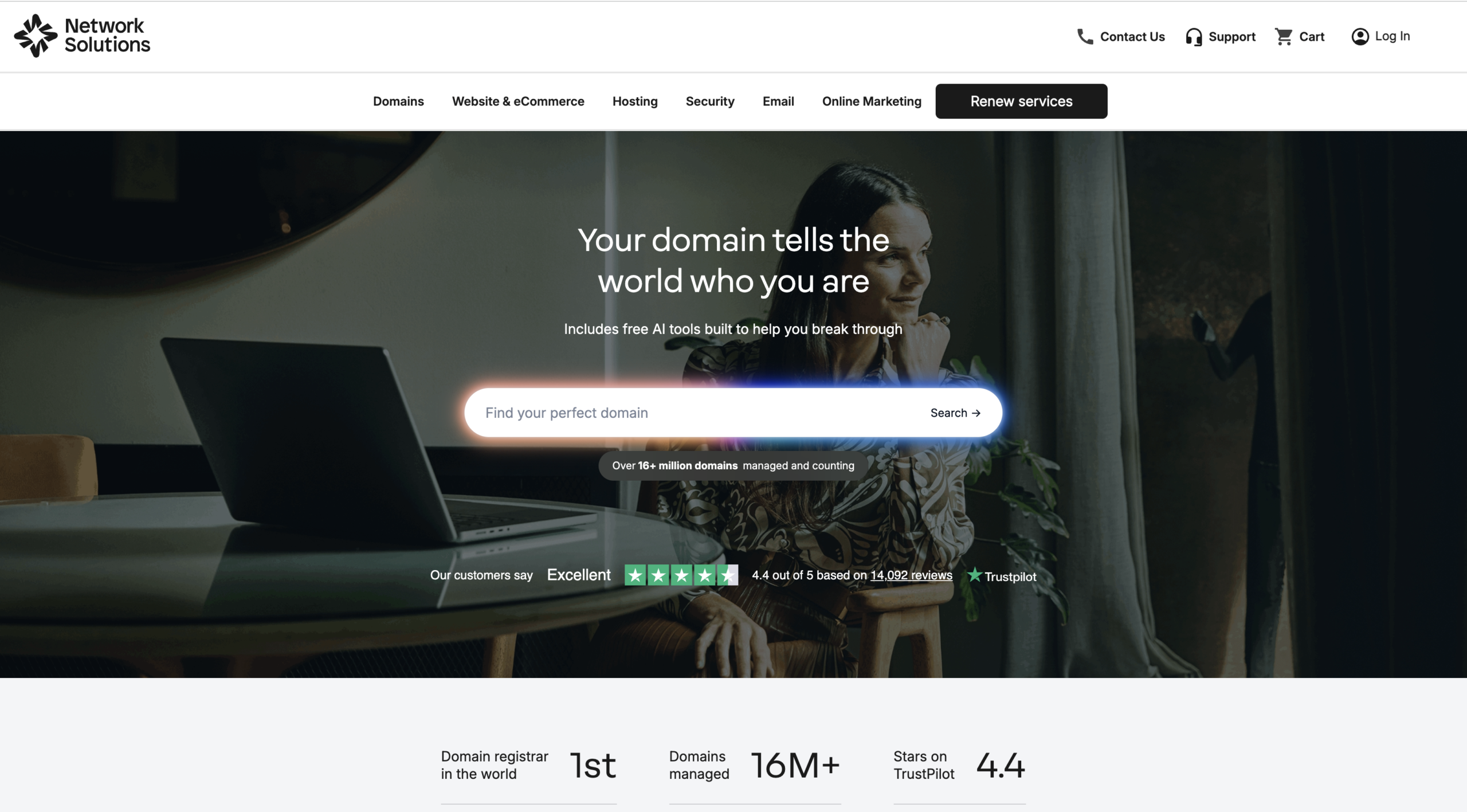
Network Solutions earns its place among the top providers by offering a reliable and business-focused email hosting solution at an affordable price. Unlike many entry-level services that limit features, Network Solutions is designed to give users a professional email experience with strong performance and dependable support. This makes it a suitable option for small businesses, entrepreneurs, and anyone looking to build a credible online presence through branded email.
One of the key advantages of this email hosting service is that it comes bundled with essential tools required for business communication. Users can create custom domain-based email addresses, manage multiple accounts, and maintain a consistent brand identity. While it may not offer a completely free plan like some competitors, it focuses on delivering stability, security, and long-term reliability, which is often more important for professional use.
In terms of flexibility, Network Solutions allows users to scale their email hosting as their needs grow. You can start with a basic plan and later upgrade to higher-tier options that offer increased storage, better performance, and additional features. This makes it a practical choice for businesses that expect growth and want a solution that can expand with them.
Overall, Network Solutions stands out as a dependable email hosting provider that prioritizes business functionality, making it a strong alternative for users who prefer a stable and scalable platform over free or limited solutions.
Included in the Cheapest Paid Plan (Network Solution)
- Custom domain-based email hosting for a professional business identity.
- Generous mailbox storage suitable for daily business communication.
- Support for IMAP, POP, and webmail access for flexible usage
- Built-in spam protection and basic security tools to keep emails safe
- Easy access across mobile devices, desktops, and browsers
- Option to create and manage multiple email accounts for teams
- User-friendly control panel to handle email settings and users
- Integration with essential business tools like contacts and scheduling features.
Network Solution Email Hosting Pros & Cons
| Pros | Cons |
|---|---|
| Professional email hosting with custom domain support | Higher pricing compared to budget providers |
| Large storage options (up to 80GB per user) | No free plan available |
| Includes collaboration tools (calendar, contacts, tasks) | Pricing can be unclear during checkout |
| Strong spam and virus protection | Renewal costs may be higher |
| Works well for business communication | Interface feels outdated compared to modern platforms |
If You Need More Advanced Features
If you need more flexibility and advanced features, Network Solutions offers multiple upgrade options within its email hosting services to suit different business needs. For users who want a simple and budget-friendly upgrade, there are entry-level plans that provide multiple mailboxes with dedicated storage for each user. These plans are ideal for small businesses or teams that need separate email accounts while keeping costs under control. With long-term billing options, the pricing remains affordable, making it easier to manage professional email hosting without overspending.
For growing teams and organizations, Network Solutions also provides higher-tier email hosting plans that include significantly larger storage per user along with enhanced collaboration features. These plans are designed to improve team productivity by offering shared email access, integrated calendars, and better communication tools.
Another advantage is scalability—businesses can choose plans based on the number of users they need and upgrade anytime as their team expands. The cost per user often becomes more economical as you add more accounts, making it a practical choice for companies planning long-term growth. Overall, Network Solutions ensures that its email hosting plans are flexible, scalable, and suitable for both small teams and larger organizations that require reliable communication tools.
3. Hostinger

Hostinger appears as one of the most practical options on this list, especially for users who want more than just email hosting. It combines website hosting, domain registration, and email services into a single platform, making it a convenient choice for beginners and small business owners. This all-in-one approach not only simplifies management but also helps reduce overall costs, particularly during the initial promotional period.
Even if your main focus is only email hosting, Hostinger still delivers a cost-effective solution. The platform keeps things simple by offering a limited number of plans, so you don’t have to spend time comparing too many options. This straightforward pricing structure makes it easier for users to choose the right plan based on their needs.
The entry-level email hosting plan is designed for users who want basic features at the lowest possible price. It is available at a very affordable introductory rate, especially when you opt for a longer billing cycle. While the renewal cost is slightly higher, it still remains competitive compared to many other providers in the market.
Overall, Hostinger stands out as a budget-friendly and user-friendly email hosting provider that is perfect for beginners, bloggers, and small businesses looking for a simple yet reliable solution.
Included in the Cheapest Paid Plan (Hostinger)
- Business Starter Plan – Starts at a very low introductory price (long-term billing)
- Renewal pricing is slightly higher but still affordable compared to competitors
- Includes support for custom domain-based email hosting
- Comes with essential features suitable for personal and small business use
- Option to upgrade as your email hosting needs grow
Hostinger Pros & Cons
| Pros | Cons |
|---|---|
| Very affordable email hosting plans | Introductory pricing requires long-term commitment |
| Simple and beginner-friendly setup | Renewal prices are higher than initial cost |
| Supports custom domain email | Fewer advanced features compared to premium providers |
| Good performance and uptime | Limited storage in entry-level plan |
| Easy integration with hosting & domains | Not ideal for large enterprise needs |
If You Need More Advanced Features
When your requirements grow beyond basic usage, upgrading your email hosting plan becomes essential. Hostinger offers higher-tier plans that are built for users who need better performance, more storage, and advanced tools for daily communication.
With an upgraded email hosting plan, you get larger mailbox storage, allowing you to handle more emails and attachments without worrying about limits. These plans are especially useful for businesses that rely heavily on email for client communication, file sharing, and internal collaboration.
In addition, advanced features such as email forwarding, multiple aliases, and better organization tools make managing emails much easier. Security is also improved with stronger spam filters and protection systems, helping keep your inbox safe and reliable.
Another key advantage is scalability. As your business expands, you can easily upgrade your email hosting plan or add more mailboxes without switching providers. This makes Hostinger a practical option for users who want a simple start with the flexibility to grow over time.
Overall, upgrading your Hostinger plan gives you a more powerful and efficient email hosting experience, making it ideal for professionals and growing teams.
4. NameCheap
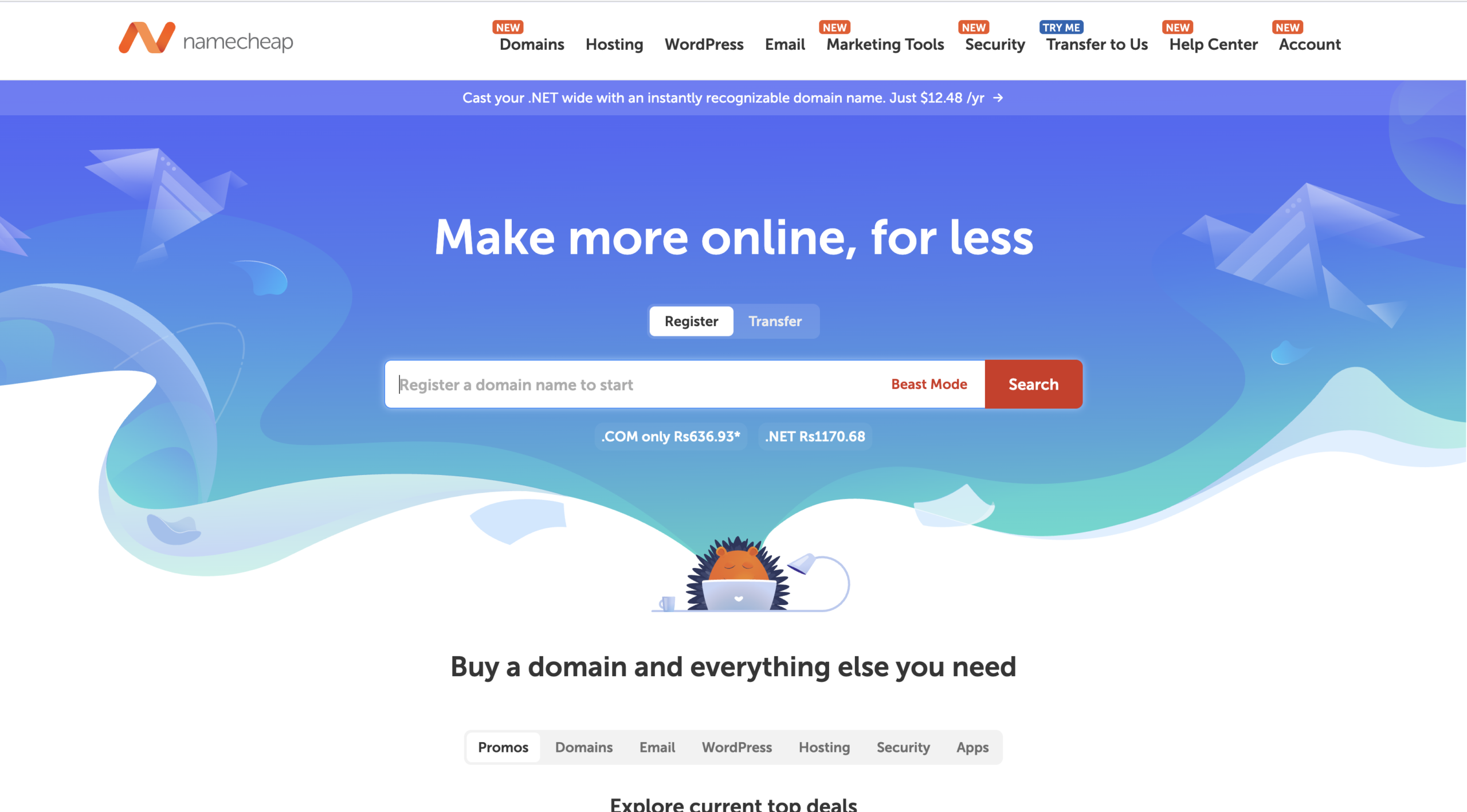
Namecheap is a reliable option for users who want affordable and easy-to-manage email hosting without unnecessary complexity. Known primarily for domain services, Namecheap also offers budget-friendly email solutions that are ideal for individuals, freelancers, and small businesses looking to create a professional email presence.
One of the biggest advantages of Namecheap’s email hosting is its simplicity. The platform provides clearly structured plans, so users can quickly choose what suits their needs without spending time comparing too many options. This makes it especially useful for beginners who want a smooth and straightforward setup process.
Even if your focus is only on email hosting, Namecheap delivers solid value at a low price point. Its entry-level plans are designed to cover essential features like custom domain email, basic storage, and reliable performance. The pricing remains competitive, making it a great choice for users who want professional email services without stretching their budget.
Overall, Namecheap stands out as a cost-effective and user-friendly email hosting provider. It is well-suited for bloggers, startups, and small businesses that need a simple, dependable, and affordable email solution.
Included in the Cheapest Paid Plan (NameCheap)
- Starter Plan – Entry-level plan with low yearly cost ( 1 mailbox, Around 5GB storage, Suitable for personal or basic business use)
- Pro Plan – Mid-level option for growing users ( Multiple mailboxes (usually 3), Increased storage (around 30GB), Includes basic collaboration features
- Ultimate Plan – Advanced plan for teams ( More mailboxes (around 5), Higher storage (up to 75GB), Supports unlimited email aliases and better flexibility
NameCheap Pros & Cons
| Pros | Cons |
|---|---|
| Affordable email hosting for beginners | Limited features in entry-level plan |
| Supports custom domain email addresses | Storage is lower in basic plan |
| Easy setup and user-friendly dashboard | Renewal pricing can increase |
| Works with popular email clients (IMAP/POP) | Fewer advanced tools compared to premium providers |
| Reliable performance for small websites | Not ideal for large-scale business use |
If You Need More Advanced Features
If your requirements grow beyond basic usage, upgrading your email hosting plan is the next step. Namecheap provides higher-tier plans that are better suited for users who need more storage, additional mailboxes, and improved flexibility.
With advanced email hosting plans, you can create multiple email accounts for your team while also increasing storage capacity for each user. This is especially useful for businesses that handle a large number of emails daily or need space for attachments and long-term communication.
These upgraded plans also include extra features such as more email aliases, better organization tools, and smoother integration with popular email clients. You also get improved performance and reliability, ensuring that your email hosting works efficiently without interruptions.
Another important benefit is scalability. As your business grows, you can easily expand your email hosting plan by adding more users or upgrading to higher storage options. This flexibility makes Namecheap a strong option for startups and small businesses planning long-term growth.
Overall, Namecheap’s advanced plans provide a balanced combination of affordability and functionality, making it a solid choice for users who need more than just basic email hosting.
5. Bluehost

Bluehost is a dependable choice for users who want simple and integrated email hosting along with their website services. While Bluehost is widely known for web hosting, it also provides built-in email features that allow users to create professional, domain-based email addresses without needing a separate provider.
One of the biggest advantages of Bluehost email hosting is how seamlessly it works with its hosting plans. Instead of managing different platforms, users can handle their website and email from a single dashboard. This makes it especially convenient for beginners, bloggers, and small business owners who prefer an easy setup and centralized control.
Even if your main requirement is just email hosting, Bluehost still offers good value through its bundled approach. Users can create multiple email accounts, manage storage, and access their emails via webmail or external clients. The features included are sufficient for everyday communication, making it a practical option for those who don’t need highly advanced tools.
Overall, Bluehost provides a straightforward and beginner-friendly email hosting solution. It is best suited for users who want a reliable service combined with web hosting, offering convenience, simplicity, and decent performance at a competitive price.
Included in the Cheapest Paid Plan (Bluehost)
- Custom domain-based email hosting included with hosting plans
- Ability to create multiple professional email accounts
- Basic mailbox storage suitable for daily communication
- Access via webmail and support for IMAP & POP email clients
- Built-in spam protection and essential security features
- Easy management through a centralized hosting dashboard
- Compatibility with mobile devices, desktops, and browsers
Bluehost Pros & Cons
| Pros | Cons |
|---|---|
| Free email hosting included with hosting plans | No standalone email-only plans in most cases |
| Easy setup and beginner-friendly dashboard | Limited features compared to dedicated email providers |
| Supports custom domain email addresses | Storage may be limited in basic plans |
| Works with IMAP, POP, and webmail | Renewal pricing can be higher |
| Manage website and email in one place | Not ideal for advanced business email needs |
If You Need More Advanced Features
As your needs expand, basic email hosting may not be enough to handle increased communication and storage demands. Bluehost provides upgraded solutions through its higher hosting plans, allowing users to enhance their email capabilities without switching platforms.
With advanced email hosting, you can benefit from larger mailbox storage, improved performance, and the ability to manage more email accounts efficiently. This is particularly helpful for businesses that deal with frequent communication, customer support emails, or team collaboration.
Bluehost also gives you the flexibility to connect your email hosting with premium services for added functionality. This includes better security, improved inbox management, and tools that help streamline communication across teams. As a result, you get a more professional and reliable email experience.
Another advantage is scalability. You can easily upgrade your hosting plan as your business grows, ensuring your email hosting continues to meet your requirements without interruptions.
Overall, Bluehost’s advanced features make it a solid choice for users who want a scalable and dependable email hosting solution that can grow alongside their business.
6. IONOS
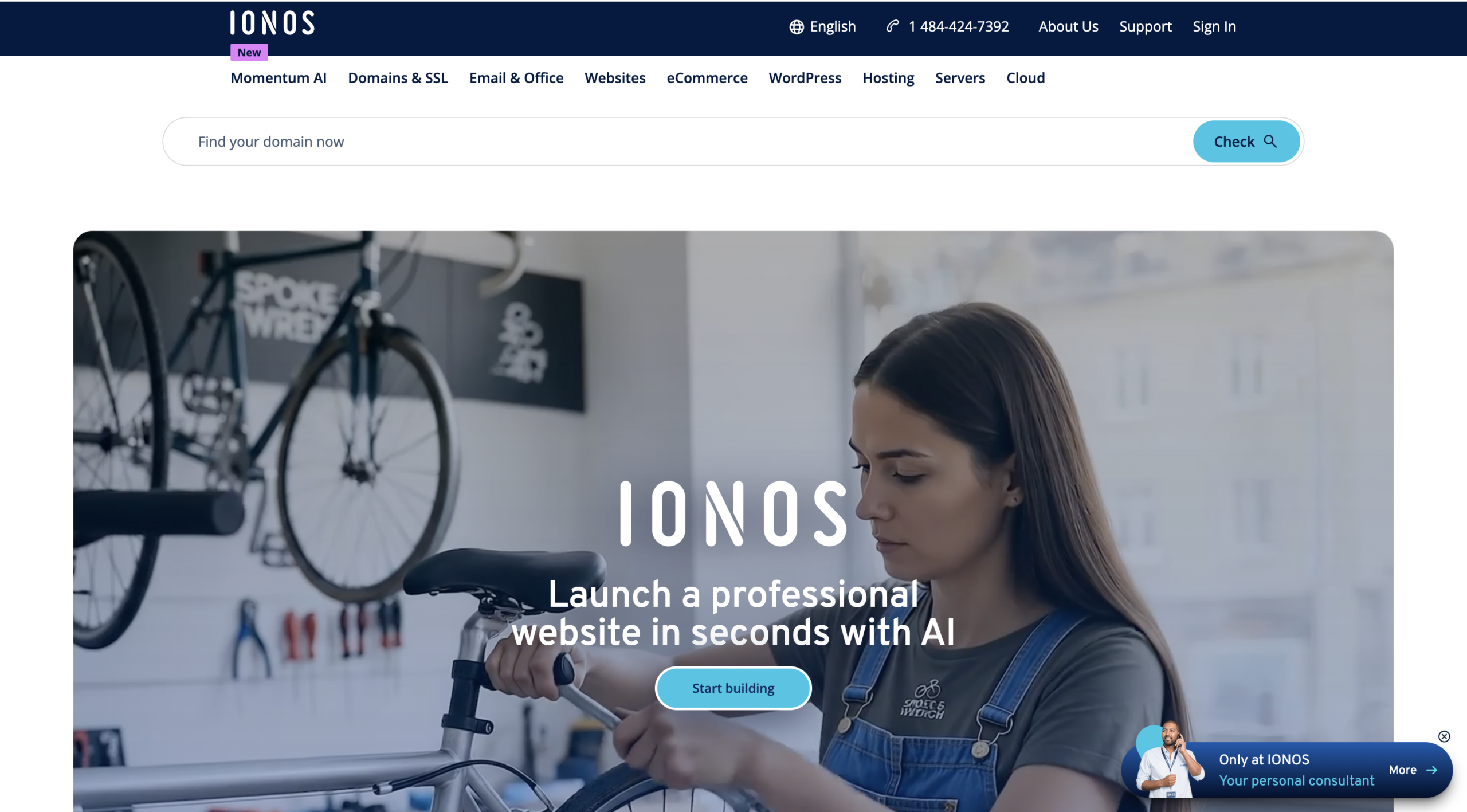
IONOS is one of the most budget-friendly options when it comes to email hosting, especially for individuals and small businesses looking to keep costs low without sacrificing essential features. It is widely known for offering simple pricing and reliable performance, making it a popular choice among beginners.
One of the key strengths of IONOS email hosting is its affordability. The platform provides low-cost plans that still include professional features such as custom domain email, basic security tools, and stable uptime. This makes it a great starting point for users who want to create a professional email presence without investing heavily.
In addition to pricing, IONOS focuses on ease of use. Its dashboard is designed to be straightforward, allowing users to manage email accounts, settings, and domains without technical complexity. This is particularly useful for small business owners and freelancers who prefer a hassle-free setup.
Another advantage of IONOS email hosting is its scalability. As your needs grow, you can upgrade your plan or add more mailboxes without any major changes to your setup. This ensures that your email service can adapt as your business expands.
Overall, IONOS stands out as a reliable and cost-effective email hosting provider. It is best suited for beginners, startups, and small businesses that need a simple, affordable, and professional email solution.
Included in the Cheapest Paid Plan (IONOS)
- Entry-level email hosting plan starts at a very low monthly cost (introductory pricing)
- Includes custom domain email support for professional use
- Provides basic mailbox storage suitable for everyday communication
- Pricing is often discounted for long-term contracts
- Renewal rates may be slightly higher after the initial period
- Option to upgrade plans for more storage and additional features
IONOS Pros & Cons
| Pros | Cons |
|---|---|
| Very affordable email hosting plans | Limited storage in entry-level plan |
| Supports custom domain email addresses | Advanced features require higher plans |
| Simple and beginner-friendly interface | Not as feature-rich as premium providers |
| Reliable performance and uptime | Renewal pricing may increase |
| Easy to scale with business growth | Basic plans may lack collaboration tools |
If You Need More Advanced Features
As your business grows, basic email hosting may no longer be enough to handle increased communication and storage needs. IONOS offers upgraded plans that are designed for users who require more control, better performance, and additional features.
With advanced email hosting options, you can access larger mailbox storage, allowing you to manage more emails and attachments without worrying about limits. These plans are especially useful for businesses that rely on email for client communication, internal coordination, and file sharing.
IONOS also enhances functionality in higher plans by providing better email management tools, improved security features, and more flexibility in handling multiple user accounts. This ensures that your email hosting remains efficient and secure as your team expands.
Another key benefit is scalability. You can easily upgrade your plan or add more mailboxes whenever needed, making it a practical choice for growing businesses that want a reliable long-term email hosting solution.
Overall, IONOS advanced plans are ideal for users who want to move beyond basic features and invest in a more powerful, secure, and scalable email hosting setup.
7. Fastmail

Fastmail is a premium yet privacy-focused email hosting provider that is well known for its simplicity, speed, and clean user experience. Unlike many providers that rely on ads or data tracking, Fastmail focuses on delivering a secure and distraction-free environment for both personal and business communication.
One of the standout features of Fastmail email hosting is its performance. The platform is designed to be fast and reliable, ensuring that emails are delivered quickly and managed efficiently. Its interface is modern and easy to navigate, making it suitable for users who want a smooth and clutter-free email experience.
Fastmail also places a strong emphasis on privacy and security. It does not scan your emails for advertising purposes, which makes it an attractive choice for users who value data protection. Along with this, it offers useful features like custom domain email support, calendar integration, and powerful email organization tools.
Another advantage of Fastmail email hosting is its flexibility. Whether you are an individual user or part of a small team, the service provides scalable plans that can adapt to your needs. It also works well across multiple devices, allowing you to access your emails from anywhere without any issues.
Overall, Fastmail stands out as a reliable and privacy-first email hosting solution. It is best suited for users who want a clean interface, strong performance, and a secure email environment without unnecessary distractions.
Included in the Cheapest Paid Plan (Fastmail)
- Basic Plan – $3/month, 5GB email storage + 1GB file storage
- Standard Plan – $5–$6/month, 50GB email storage + 10GB file storage
- Professional Plan – ~$9–$10/month, 100GB email storage + 50GB file storage
- Individual Plan (Personal) – ~60GB total storage
Fastmail Pros & Cons
| Pros | Cons |
|---|---|
| Strong privacy-focused email hosting (no ads or tracking) | More expensive than budget providers |
| Fast and clean user interface | No free plan available |
| Supports custom domain email | Limited advanced business tools |
| Generous storage in higher plans | Not ideal for large enterprise teams |
| Reliable performance and uptime | Fewer integrations compared to Google Workspace |
| Multiple email aliases supported | Pricing may feel high for beginners |
If You Need More Advanced Features
If you’re looking to go beyond basic functionality, upgrading your email hosting plan can significantly improve your experience. Fastmail offers higher-tier plans that are designed for users who need more storage, better organization tools, and enhanced control over their email accounts.
With advanced email hosting, you get larger mailbox capacity, which is ideal for managing high volumes of emails and attachments without constantly worrying about space. This makes it especially useful for professionals and businesses that rely heavily on email communication.
Fastmail also provides powerful email management features in its upgraded plans. These include advanced filtering rules, custom folders, and flexible alias options, allowing you to organize your inbox more efficiently. You can also manage multiple domains and email addresses from a single account, which is helpful for businesses handling different brands or projects.
Another key benefit is improved productivity. Fastmail includes built-in tools like calendars and contact management, making it easier to schedule tasks and stay organized. Combined with strong privacy practices and reliable performance, this makes Fastmail’s email hosting a solid choice for users who want both efficiency and security.
Overall, if you need a more powerful and flexible email hosting solution, upgrading to a higher Fastmail plan ensures better performance, more storage, and smarter email management tools.
8. Proton Mail
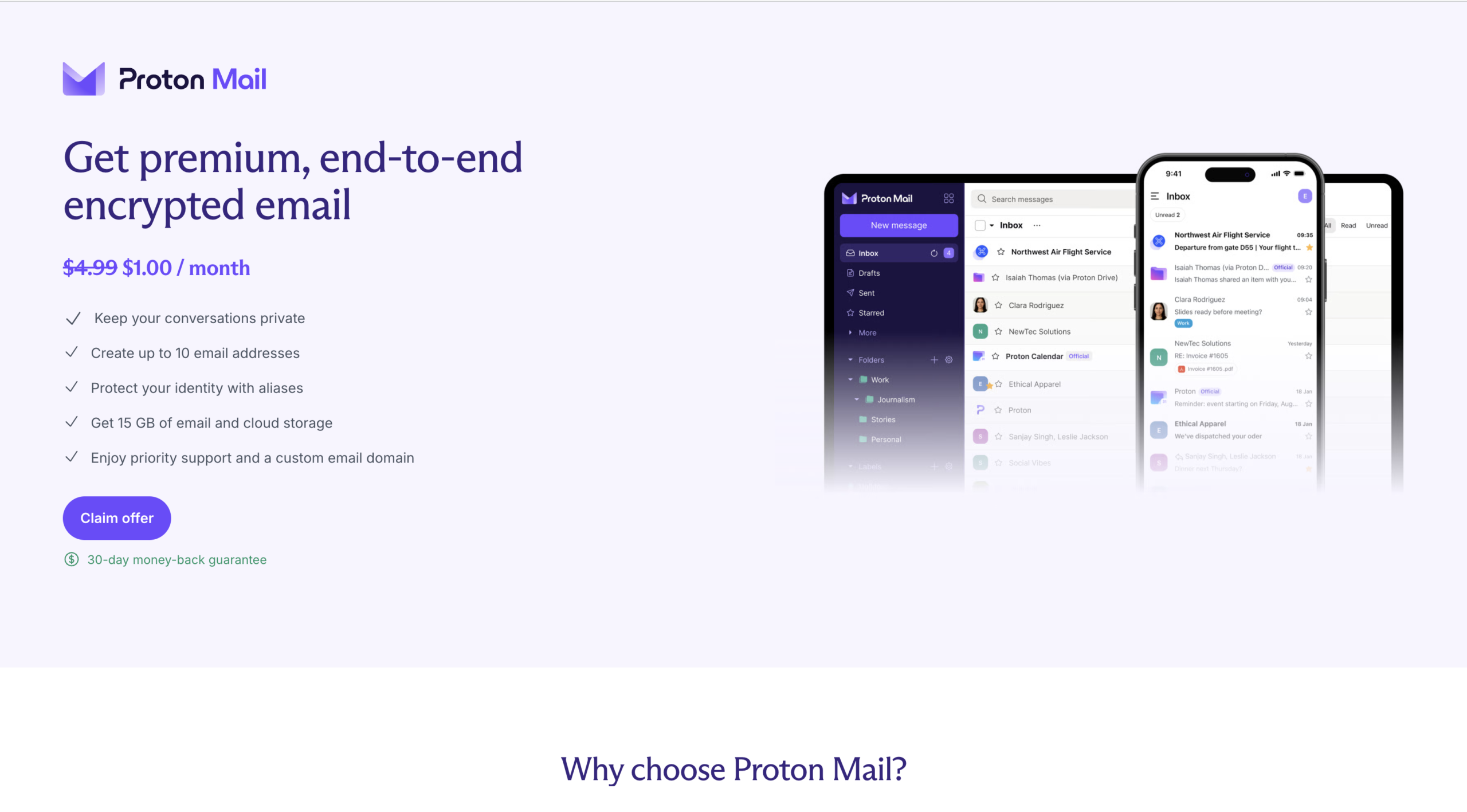
Proton Mail is a privacy-focused email hosting service that is widely trusted for its strong security and encryption features. It is designed for users who want complete control over their data and prefer a secure communication platform over traditional email services.
One of the biggest strengths of Proton Mail email hosting is its end-to-end encryption. This means your emails are protected from unauthorized access, making it an excellent choice for professionals, businesses, and individuals who prioritize privacy. Unlike many providers, Proton Mail does not rely on ads or data tracking, ensuring a clean and secure email experience.
In addition to security, Proton Mail offers a simple and user-friendly interface that works smoothly across web and mobile devices. It also supports custom domain email, allowing businesses to maintain a professional identity while benefiting from secure email hosting.
Another advantage is flexibility. Proton Mail provides both free and paid plans, making it accessible for beginners while also offering advanced features for users who need more storage and enhanced functionality. As your needs grow, you can upgrade your email hosting plan to unlock additional tools and better performance.
Overall, Proton Mail stands out as a secure and reliable email hosting provider. It is best suited for users who value privacy, data protection, and a safe communication environment without compromising on essential features.
Included in the Cheapest Paid Plan (Proton Mail)
- Free Plan – Basic email hosting with limited storage and features
- Plus Plan – Low monthly cost with custom domain support and additional email addresses
- Unlimited Plan – Higher storage capacity along with extra privacy tools and bundled services
- Business Plans – Per-user pricing with advanced features, better storage, and multi-user support
Proton Pros & Cons
| Pros | Cons |
|---|---|
| Strong encryption-based email hosting for high security | More expensive than basic email providers |
| Free plan available for beginners | Limited storage in free version |
| No ads and strong privacy protection | Advanced features require paid plans |
| Supports custom domain email | Fewer integrations with third-party apps |
| Reliable and secure communication platform | Can feel complex for new users |
| Scalable plans for individuals and teams | Not ideal for users seeking the cheapest option |
If You Need More Advanced Features
If your needs go beyond basic usage, upgrading your email hosting plan can unlock more powerful tools and stronger security. Proton Mail is designed for users who prioritize privacy, and its higher-tier plans offer advanced capabilities for both individuals and businesses.
With upgraded email hosting, you get increased storage, support for multiple custom domains, and the ability to create additional email addresses. This is especially useful for businesses managing different departments or brands under one system. It also allows better organization and smoother communication across teams.
One of the biggest advantages of Proton Mail’s advanced email hosting is enhanced security. Higher plans include stronger encryption features, improved account protection, and better control over your data. This makes it a great choice for professionals who handle sensitive information and require a secure communication platform.
In addition, premium plans provide extra tools like advanced filtering, priority support, and improved email management options. These features help you stay organized and maintain efficiency, even when dealing with a large volume of emails.
Overall, if you want a more secure and feature-rich email hosting experience, upgrading your Proton Mail plan is a smart move. It offers the right balance of privacy, performance, and scalability for growing users and businesses.
🤔 Which Email Hosting Provider Should You Choose?
Choosing the right email hosting provider depends on your specific needs, budget, and how you plan to use your email service. Each platform offers different strengths, so the best option will vary from user to user.
If you are looking for low-cost and simple email hosting for personal use or a small team, providers like Zoho Mail and IONOS are excellent starting points. They offer affordable plans with essential features, making them ideal for beginners and small businesses.
For users who want a more business-oriented email hosting solution with better structure and reliability, Network Solutions can be a suitable choice. It focuses on professional communication and scalability for growing teams.
If you prefer an all-in-one solution that includes website hosting, domain, and email hosting, then Hostinger and Namecheap are great options. They simplify everything by offering multiple services in one place at budget-friendly prices.
For users who already use web hosting and want built-in email features, Bluehost provides integrated email hosting along with its hosting plans, making it convenient for website owners.
If your priority is privacy, speed, and a clean email experience, then Fastmail is a strong contender. It offers a modern interface and reliable performance without unnecessary distractions.
On the other hand, if you are focused on security and encrypted email hosting, then Proton Mail is one of the best choices. It is designed for users who want maximum data protection and secure communication.
💡 Final Tip
No matter which email hosting provider you choose, you will need a domain name to create a professional email address (like yourname@yourdomain.com). So make sure to select a provider that either includes a domain or makes it easy to connect one.
Final Conclusion
Choosing the right email hosting provider in 2026 doesn’t have to be complicated—it simply comes down to your budget, features, and long-term needs. As we’ve explored, there are plenty of affordable options available that offer professional email services without putting pressure on your wallet.
If you’re just starting out or need a basic solution, platforms like Zoho Mail and IONOS provide reliable and low-cost email hosting with essential features. For users who want an all-in-one setup that includes domain and hosting, Hostinger and Namecheap offer great value and convenience.
Businesses that need a more structured and scalable environment can consider Network Solutions or Bluehost, especially if they already manage their website alongside email. On the other hand, users who prioritize speed, simplicity, or privacy can look at Fastmail for a clean experience or Proton Mail for secure and encrypted communication.
In the end, the best email hosting solution is the one that matches your specific needs—whether it’s affordability, security, scalability, or ease of use. Take your time to compare features, pricing, and future requirements before making a decision.
FAQs about email hosting
What is email hosting?
Email hosting is a service that allows you to create and manage professional email addresses using your own domain name (for example, yourname@yourdomain.com). It provides storage, security, and tools to send and receive emails reliably.
Why do I need email hosting instead of free email services?
Free email services are fine for personal use, but email hosting gives you a professional identity, better security, and more control over your email accounts. It is especially important for businesses that want to build trust with customers.
Which is the cheapest email hosting provider in 2026?
Some of the most affordable email hosting providers include Zoho Mail, IONOS, and Namecheap. These platforms offer budget-friendly plans with essential features.
Can I use my own domain with email hosting?
Yes, most email hosting providers allow you to connect your custom domain, so you can create branded email addresses for personal or business use.
Is email hosting secure?
Yes, good email hosting providers include security features like spam filtering, encryption, and account protection. Providers like Proton Mail focus heavily on privacy and secure communication.
What features should I look for in email hosting?
When choosing email hosting, look for storage capacity, number of mailboxes, spam protection, custom domain support, and scalability. These features ensure your email service meets your needs as you grow.
Can I access my email on mobile and desktop?
Yes, most email hosting services support access through webmail, mobile apps, and email clients like Outlook or Gmail using IMAP/POP settings.
Which email hosting is best for small businesses?
For small businesses, providers like Hostinger, Zoho Mail, and Bluehost are great choices because they offer affordable and easy-to-manage email hosting solutions.
Do I need web hosting to use email hosting?
No, you don’t always need web hosting. Many providers offer standalone email hosting, but some platforms like Hostinger and Namecheap also bundle both services together.
Can I upgrade my email hosting plan later?
Yes, most email hosting providers allow you to upgrade your plan anytime. This makes it easy to add more storage, users, or advanced features as your needs grow.


Leave a Comment